
Ecosystem
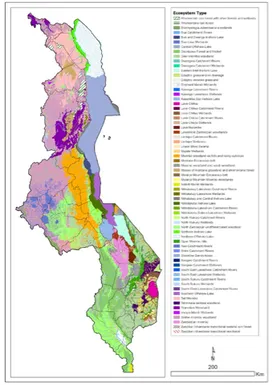
Malawi ecosystem types
Ecosystems are broadly categorised as terrestrial and aquatic. Ecosystems in Malawi include forests, mountains and grasslands. On the other hand, aquatic ecosystems include lakes, rivers, streams wetlands, dams and ponds.
Both terrestrial and aquatic ecosystems are represented in the country’s protected areas. Protected areas have the richest biodiversity, which include 87 forest reserves, five national parks, four wildlife reserves and three nature sanctuaries. Most of these protected areas are Important Bird Areas (IBAs). Biodiversity in the protected areas contribute significantly to economic growth and poverty alleviation.
An Economic Valuation of Natural Resources in Malawi (Yaron et al, 2011) reported that tourism generated 1.8% of the country’s total GDP in 2001 and 5.8% in 2007, respectively. In addition, surrounding local communities benefit from the protected areas through employment and direct consumptive use of biological resources from protected areas. For example, 4,491 people benefited from harvesting thatch grass and bamboo valued at MK 2,918,050 (US $18,238) in the Majete Game Reserve during the 2010/2011 financial year. Malawi is also enhancing Other Effective Conservation Measures by enhancing conservation and sustainable use of biodiversity on community land. For example, a pilot project to designate Elephant Marsh as a Community Conservation area is underway. This will ensure that areas with high biodiversity under community land are identified, managed and sustainably used.
Aquatic ecosystems on the other hand cover about 20% of the total surface area of Malawi and are habitats to a diversity of fish and other aquatic fauna and flora. Major aquatic ecosystems in Malawi include lakes (Malawi, Malombe, Chilwa, Kazuni and Chiuta), rivers (Songwe, South Rukuru, North Rukuru, Dwangwa, Linthipe, Shire and Bua River), wetlands and other small water bodies. Aquatic ecosystems are important in Malawi as they provide goods and services such as fisheries, agriculture, livestock grazing, ecotourism, water supply, water purification, carbon sequestration and transport, among others. The largest aquatic ecosystem is Lake Malawi, which covers a surface area of over 29,000 km2 and drains a catchment area of 100,500 km2. It is the largest and most significant water body in terms of fish production in Malawi, usually contributing over 60% of the total annual landings. The level of biodiversity in the aquatic environment of Lake Malawi is very high. The fish in Lake Malawi are one of the most remarkably diverse and abundant faunal groups in the world.
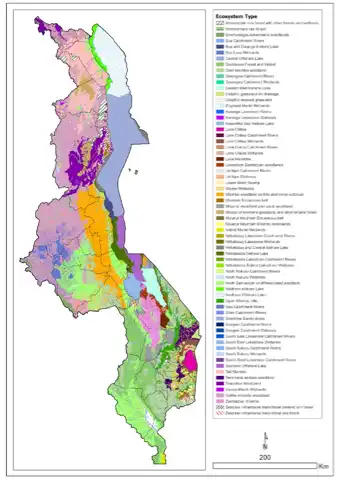
Map of Malawi's ecosystem types can be accessed here
Published on
2017 Dec 06Countries

Malawi